
What The In-Crowd Won't Tell You About Proxy Sites
페이지 정보

본문
It is an proxy often called proxy server software that acts as an intermediary between the client and server over the internet. Without the use of proxy, a user will send a request for resource directly to the server and it would deliver that resource to its user directly. It's not hard to comprehend and apply the use of proxy servers can offer benefits such as greater performance, privacy, security, and so on. In addition to providing a layer of pass-through, proxies act as a gatekeeper on the internet, separating clients and servers.
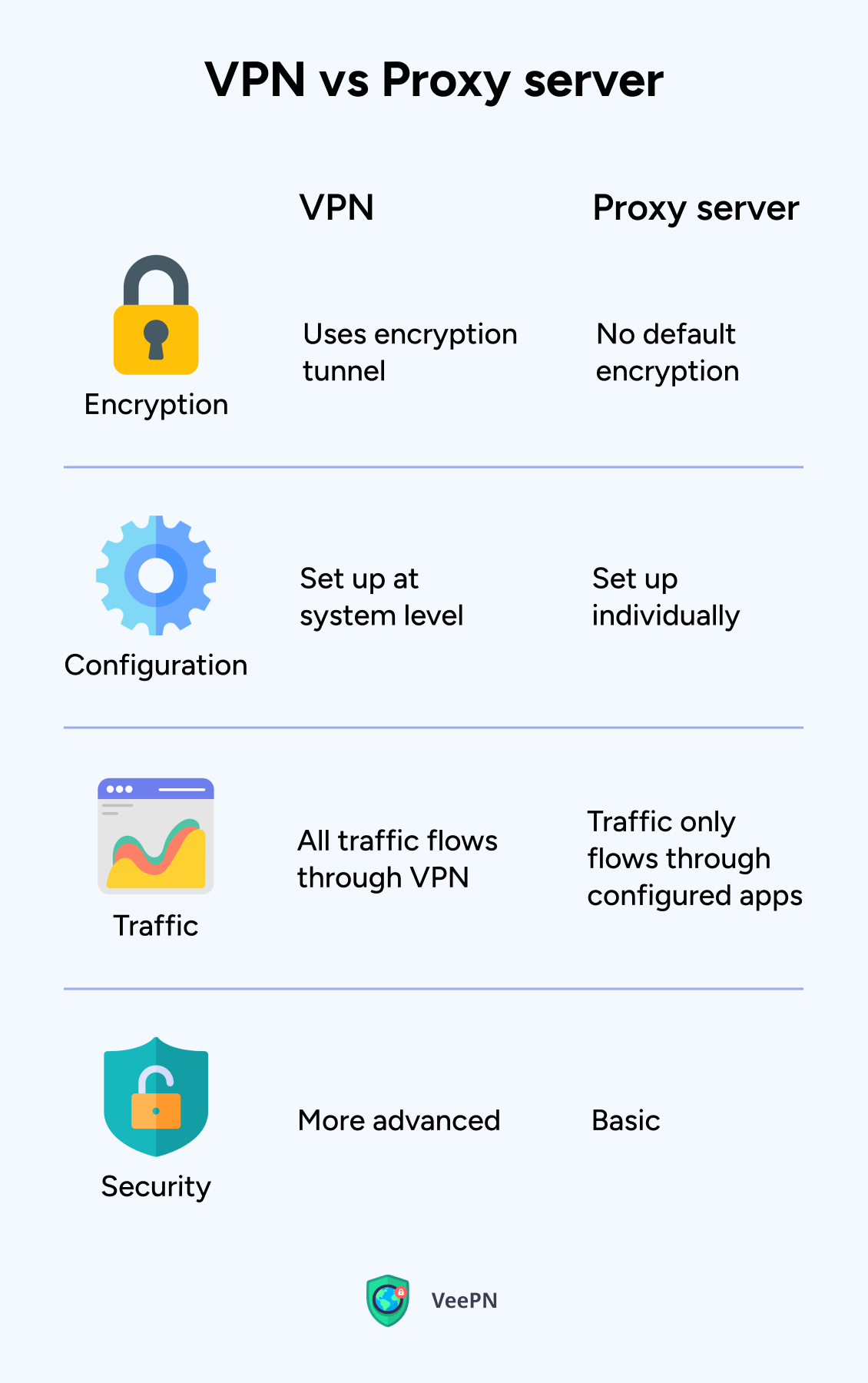
The general collection of server hardware as well as the software used to install proxy is often referred too in the context of proxy servers. This article will focus on proxies traditionally understood as software, and also in the context of web servers. The article will provide details of the two main types of proxies that are forward and reverse. forward proxy and reverse proxy. reverse proxy. Each has a distinct use case, often confused due to the similar naming convention.
This article will provide you with an understanding of types of proxies, their subtypes, and how they function in typical setups. In this article, you'll be able to understand how to identify the circumstances in which using proxy servers is beneficial, and select the correct solution in between reverse and forward proxy, for each situation.
Understanding Forward Proxies
In other words, a forward proxy sometimes called an open proxy acts as the representative of the customer who wants to send requests over on the web to an origin server. In this situation, all attempts to send requests made by the client are instead sent to the forward proxy. In this situation the forward proxy that is in place in the place of the customer will look into the request. First, it must check if the client is authorized to accept requests from this specific forward proxy. It will then either deny the request or forward it to its original server. The client does not have an internet connection directly; it can only access what forward proxy allows it access to.
The most common reason for using forward proxies is to increase privacy or security on the internet. Forward proxy makes use of the internet in place of a client and in that process it can use an alternate IP address to the client's initial IP address.
Based on the way it's set up depending on how it's set up forward proxy can provide many features as well as the ability to:
Beware of ad-tracker.
Circumvent surveillance.
Find restrictions based on your geographic location.
Forward proxies can also be used in systems that offer central security and access based on permissions, for example, in a workplace. If all internet traffic flows via an open forward proxy administrators can grant access to only certain users who are filtered by an ordinary firewall. Instead of putting firewalls in place for the client layer, which could include several devices that have various settings, users and environments, a firewall may be added to this forward proxy layer.
It is important to note that forward proxy servers need to be manually configured for use before they can be used, while reverse proxies are able to be not recognized by clients. Depending on whether an IP address from the user is transferred to the server that originated it through the forward proxy privacy and anonymity could get granted, or even made more transparent.
There are many options to explore options for forward proxy options
Apache The Apache is a popular open-source web server, which offers forward proxy functionality.
Nginx: Another well-known open-source webserver that has forward proxy capabilities.
Squid: A no-cost forward proxy based on the HTTP protocol. Squid doesn't include the full web server. We recommend you read our article on the most efficient way to create Squid proxy that allows private connections on Ubuntu 20.04.
Dante Forward proxy that makes use of the SOCKS protocol instead of HTTP, making it better suitable for situations such as peer-to-peer traffic. You might also want to look into how to set up an Dante proxy to connect privately on Ubuntu 20.04
Understanding Reverse Proxies
A reverse proxy functions to act as an agent of web servers, taking care of the incoming requests of customers on behalf. The web server may be comprised of one server or multiple servers. In addition, it could be used as an application server such as Gunicorn. In any case, a request could come from a customer via the internet at large. In most cases, the request is sent directly to the server that has the resources that the user is in need of. Instead, a reverse proxy works as an intermediary to isolate your server from interaction with the internet's open.
From a customer's point of view, the experience when using reverse proxy is the same as communicating directly with your webserver. It is functionally the same and the user is unable to discern the difference. Client requests a resource and then receives it, without any additional configuration required by the client.
Reverse proxy services offer functions like:
Centralized security for web servers.
The sending of traffic according to rules you can make.
New functionality added for caching.
While central security is an advantage of both reverse and forward proxy platforms, reverse proxy providers this service to only the server layer, and not to the layer that clients use. Instead of focusing on the maintenance of firewalls for Web server layers which may contain several servers that have different configurations, the bulk of firewall security could be concentrated on the reverse proxy layer. Furthermore, removing the burden of interfacing with firewalls and dealing with requests from clients far from web servers permits them to focus solely on meeting the requirements of their clients.
In the event of multiple servers behind a reverse proxy the reverse proxy is also responsible for controlling which requests go to which server. There may be several web servers providing the exact identical service, with different kinds of resources or a mixture of both. They can utilize the HTTP protocol just like a standard web server, but can also be equipped with application server protocols like FastCGI. A reverse proxy can be used to direct clients to particular servers based on the kind of resource they are seeking, or to follow specific rules regarding traffic volume.
Reverse proxies also benefit from their position in front of web servers through the possibility of storing information. Massive static content can be configured with caching policies to avoid hitting web servers on each request. Some applications allow users to serve static content directly, without having to connect to the web server at all. Furthermore reverse proxy is capable of compressing these files.
The well-known Nginx webserver is a powerful reverse proxy option. Although it is true that the Apache web server is also equipped with an reverse proxy, however, it's a separate feature of Apache but Nginx was designed originally to focus on the reverse proxy function.
Distinguishing Forward Proxy From Proxy Use. and Reverse Proxy Use
Since "forward" along with "reverse" are associated with directionality, they can be misleading when comparing "incoming" or "outgoing" traffic. The labels can be confusing because both types of proxy can handle requests and also respond. The best way to distinguish between reverse as well as forward proxies would be to research the requirements of the app that you're creating.
Reverse proxy is a crucial element to consider when designing a system that can provide web-based applications on the internet. They serve as your servers when you are connected to the internet.
A forward proxy is useful when presented to users for personal usage, or in a corporate environment. They represent your clients when you interact with the internet.
Utilizing case-based differentiation instead of focusing solely on naming conventions that are similar can prevent confusion.
Conclusion
The article clarified what a proxy was along with the two types of them, namely the forward and reverse proxy. Practical application scenarios and a review of useful features was used to distinguish between reverse and forward proxies. If you're interested to learn more about the possibilities of proxies, you can check out our guide on how to set up Nginx as an internet server and reverse proxy to Apache using an Ubuntu 20.04 server.
If you beloved this article therefore you would like to get more info pertaining to Proxy Sites (https://influence.co/prseo) generously visit our web site.
- 이전글4 Redesigning Projects For That Bathroom 24.02.12
- 다음글10 Straightforward Ways You can Flip Natural Health Into Success 24.02.12
댓글목록
등록된 댓글이 없습니다.